
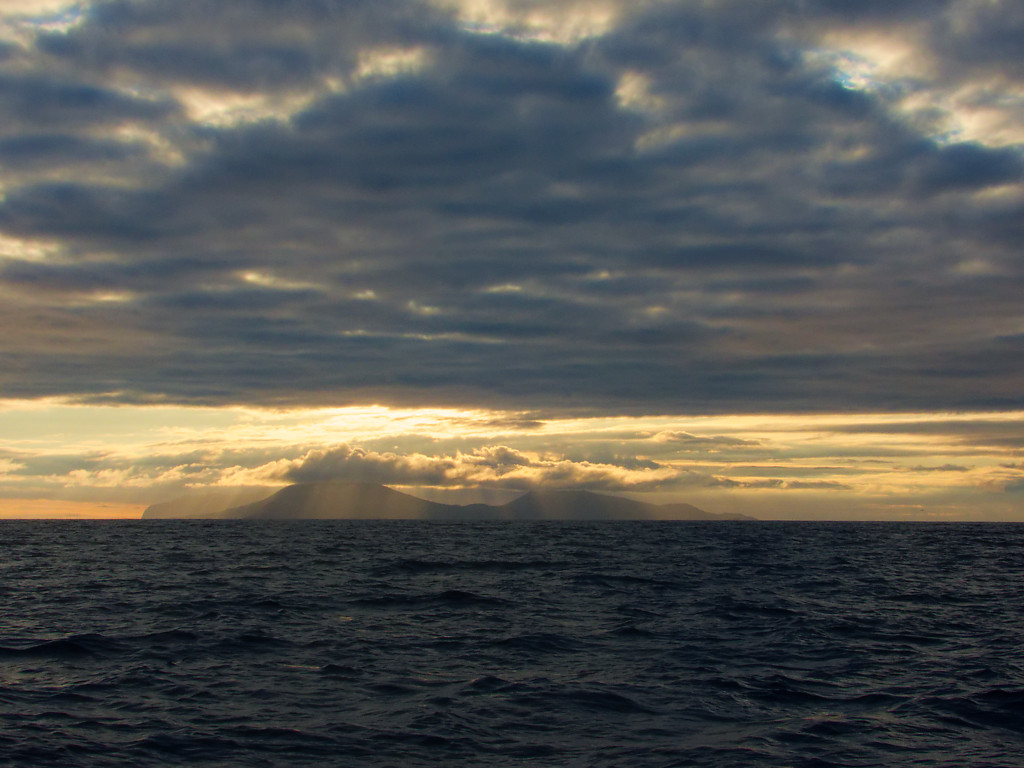
The Passage started out with light winds, mostly from behind the boat. Initially, we started sailing west. The forecast was for the Azores High to establish north and east of the islands. It was predicted that I would have to motor in excess of 5 days. I do not have enough fuel to motor that long.
Knowing there were three gales coming across the ocean from North America, I chose to walk the thin line of avoiding them but have wind, rather than no wind at all.
At the start we went through a series of sailing in light winds; the winds would die… then, motorsailing. Then just motoring through the night as the winds dropped too low for any sails.
Besides the limited amount of fuel I carry onboard, another problem with motoring is I must hand-steer the boat. Distant Horizon does not have an autopilot to do the steering. Her method of steering assistance is a windvane steering system that uses the wind to maintain my course. When motoring, the wind is always coming from the front of the boat. To maintain a specific course, I must steer… all night long.
Day #2 started out the same with a mix of sailing and motorsailing. However, in the afternoon the winds picked up. That was a happy moment, I would be able to take a nap. Which I did after setting up the windvane.
The wind was coming from the south, which meant I was in the influence of the High Pressure system to the east.
The wind was coming from the south. I was sailing north. Distant Horizon does not like wind from behind. Especially since I do not have a spinnaker, which is the large colorful sail you see in sailboat photos. Spinnakers are made for downwind sailing. However, they are more complicated and require more lines and rigging. In other words, they would increase my workload. Sailing solo, I am trying to reduce my workload.
What you see below, is a sail called a drifter. The rigging is conventional. It is made from the same nylon material as a spinnaker so, it is useful for light wind sailing. I have two drifters. Pictured below is the smaller one used for very light winds. The main difference, is I must keep the wind coming from the rear quarter (corner) of the boat rather than from directly behind.
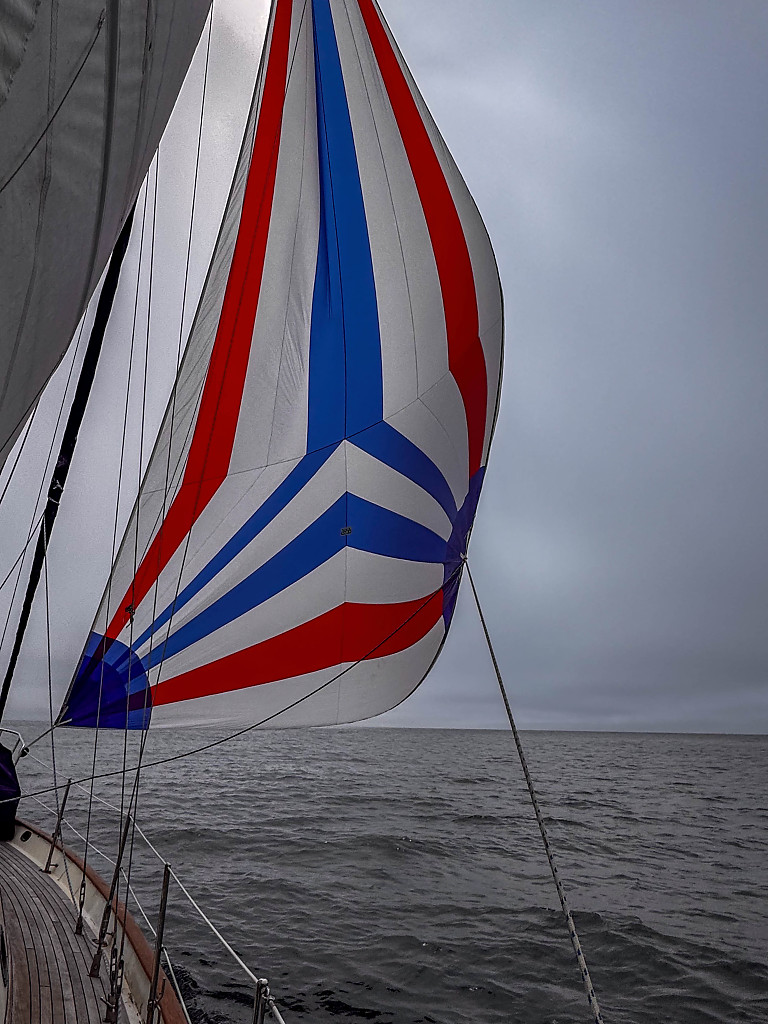
Small – Light Wind Drifter
I had a couple days sailing with the drifter. We made good progress.
Then the winds got so light, I could not keep the wind in the sail at all. I had to motor once again. The engine overheated after just 30 minutes. I let it cool. During that time, I cooked a meal. We were just bobbing like a cork on the ocean. In the past, this is the motion that caused me to get seasick. I was happy that it did not on this particular occasion.
The winds picked up and I was able to sail… downwind again. This pattern continued for days as I broke away from the Azores High.
I was called by another sailboat that was about 25 miles behind me. It was a slightly larger boat and going a little faster. The man on the other end of the radio was Irish. He gave me a plan of places to stop along the west coast of Ireland if I decided to go that way. He was crewing on an English boat heading for Plymouth.
When they finally caught up later that day, I took a few pictures of their boat. In the photo below, you can see the boat, and also the thin overcast that I had most days.
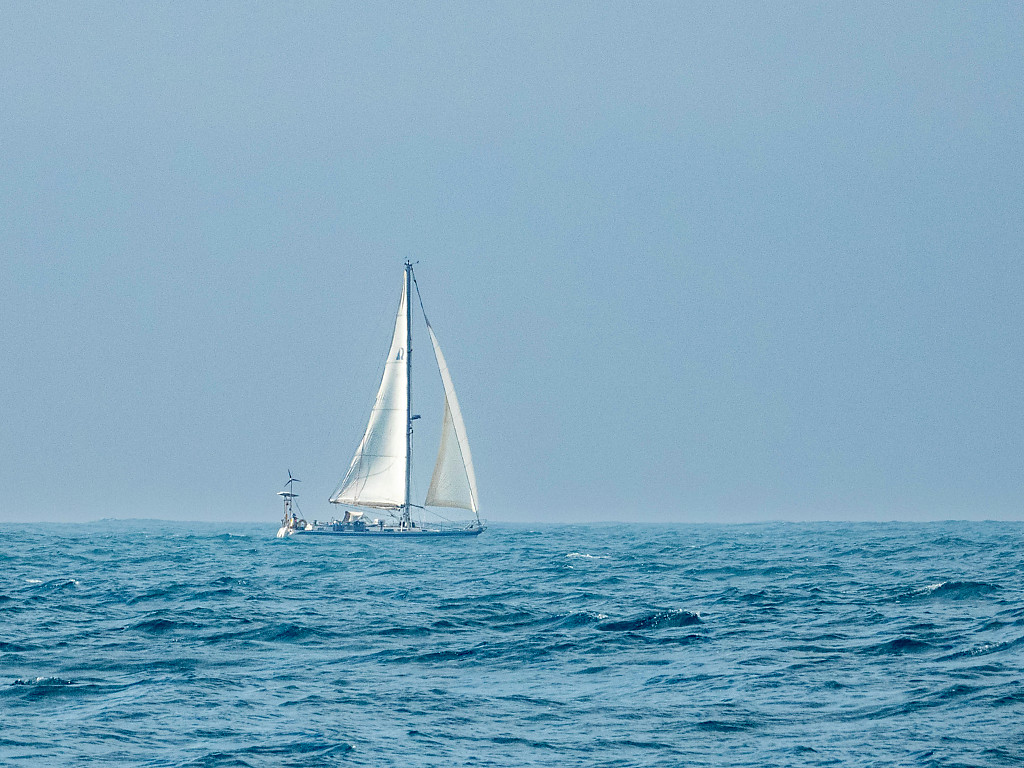
Sailboat passing in the Middle of the Atlantic Ocean
The days were mostly overcast. The nights were clear. There was no moon, but plenty of stars.
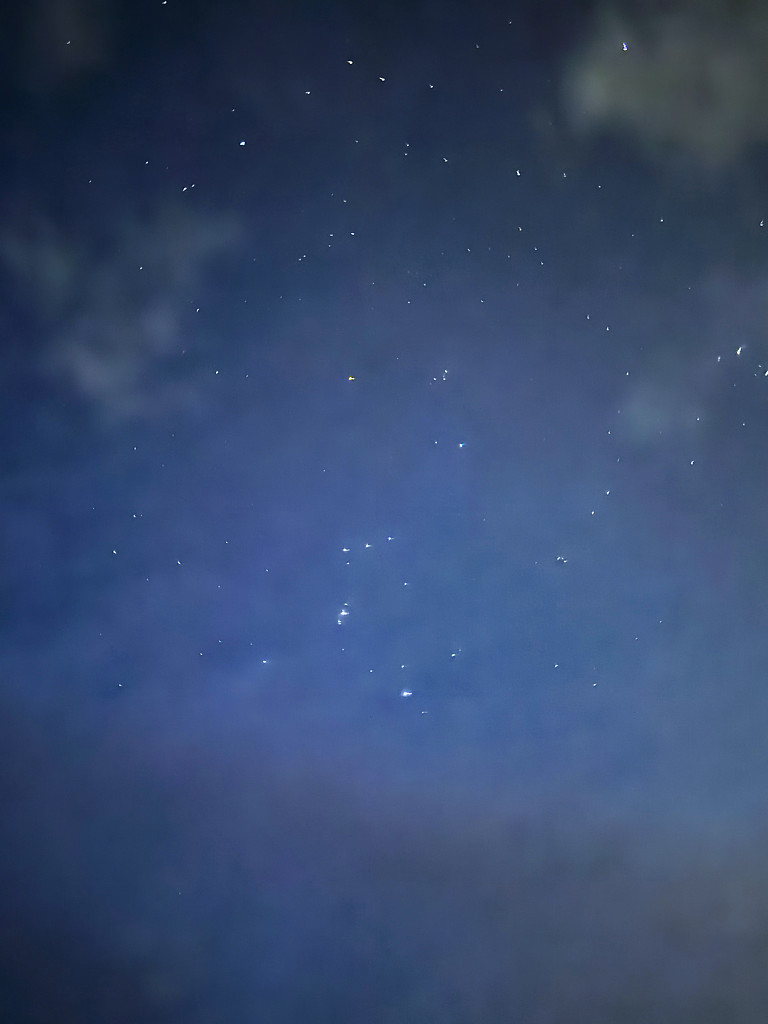
The Constellation Orion in the Southern Sky
Despite having little to no wind, or wind behind me, The first week went quite smoothly. I had several days where I made good progress.