
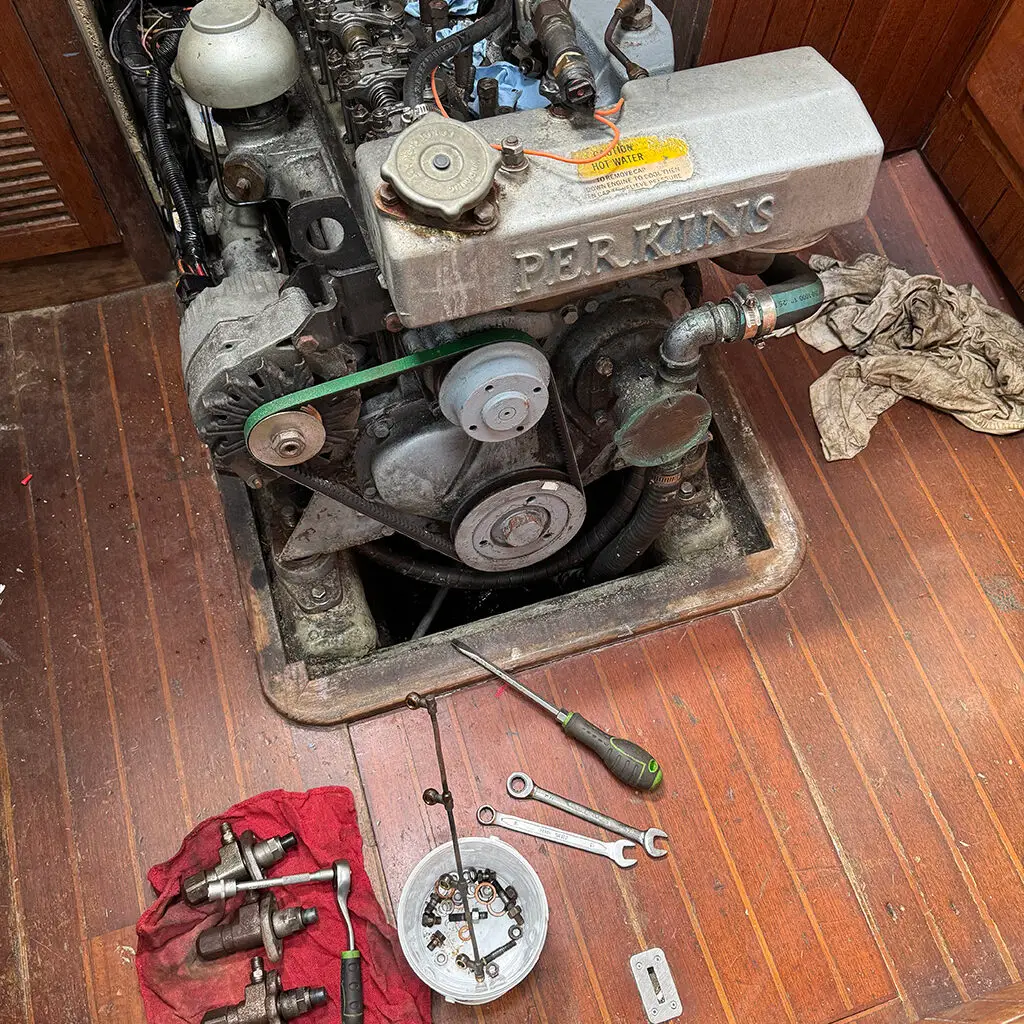
I was cleaning the battery box and testing the batteries. The battery cells were all low on water after 18 months of inattention. Still, I fealt lucky. They were maintaining a full charge… By early afternoon, the solar panels had the batteries up to 14.2V. I only had to add water to each cell.
Next, I had to ensure the engine alternator was going to charge the batteries properly. It was early evening. After topping each cell off with water, I turned off the solar panels and started the engine. In just a couple minutes, the battery chemistry started to become active. Everything was looking surprisingly great!
Then, the engine briefly surge from the 900 rpms to over 3900 rpms and back down to 900 rpms again. I was startled and unsure of what caused that. Before I could really think it through, it did it again, but this time the rpms stayed at nearly 4000 rpms… I had a diesel runaway… meaning it was running out of control at maximum rpm.
Unlike a gasoline engine, diesel’s do not have an ignition system; no spark plugs, no, coil, no distributor. Diesels ignite the fuel with high compression. The compression so high that it heats the combustion chamber hot enough to cause the fuel to explode. So, a proper diesel engine only needs air and fuel to run. The more fuel you give it, the faster it runs. Mine was getting more and more fuel even though the throttle was still near the idle position.
I had to remove the engine hood. Leaning over an engine running wide open at maximum rpms is a scary event. The thought of engine parts shooting out at me was definitely in my mind. I shut off the fuel completely… the engine kept running. I did not know where it was getting fuel. I grabbed a nearby wrench and removed the fuel lines from the injectors… Still running at max rpm! Then, I had to find a screwdriver because I had diligently secured the air cleaner. So, I blocked off the air intake and the engine shut down.
I consulted with Alan Harris who had watched my boat while I was gone. He was a diesel truck mechanic, driver, and a ship’s engineer responsible for the diesel engines.
Alan came to Distant Horizon to run a compression test. He said that was the first step before taking anything apart.
We removed the injectors. That is where his compression tester would connect to the engine.
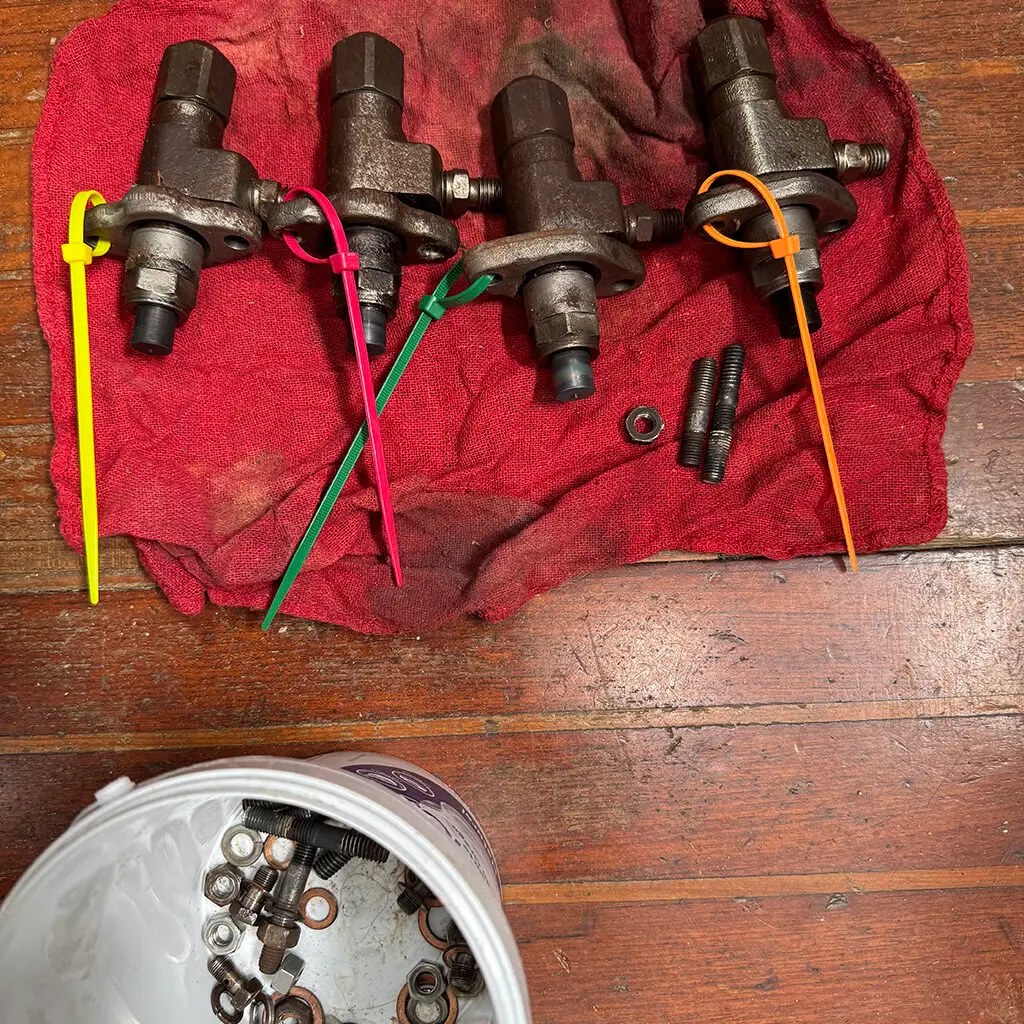
Injectors
Even though the runaway was two weeks prior and had not been started since, he found a wet injector. He said that was likely a major contributor to the problem and I was probably making oil. I had no idea what that meant.
He explained the wet injector was leaking fuel into the combustion chamber in addition to the injectors spray of fuel. So, there was too much fuel in the combustion chamber. Compression would just evaporate most of it, but the evaporation kept the combustion chamber too cool to burn the fuel.
Then he explained the excess fuel would leak into the oil pan. He said that is making oil. He pulled the dip stick to check the oil. The level was half way up the dipstick!
He continued to explained the hot oil would evaporate the diesel fuel. Then those vapors would leak past the rings of each cylinder. The fuel for the engine runaway was actually the thinned engine oil.
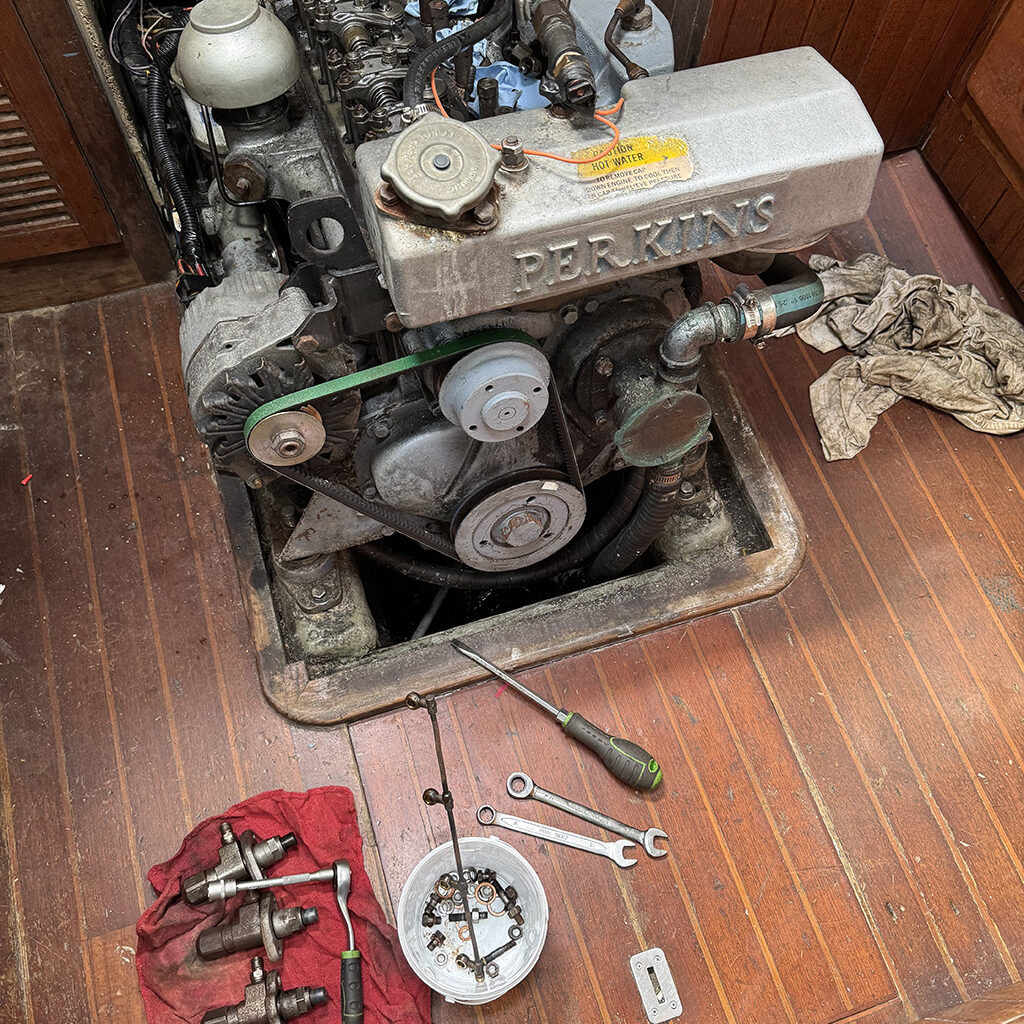
Injectors Removed for a Compression Test
I sent the injectors to a specialty shop to be tested. It turned out that there were two bad injectors; one leaking real bad, the other partially clogged.
I opted to purchase four newly rebuilt injectors from the primary repair shop in England since my Perkins is a British engine.
After completing the compression test and finding all cylinders were well within the acceptable range, he inspected the top of the engine. He said there was no sign of the anything being robbed of oil. He said I had shut it down before any real damage could occur. Then, he looks at me and smiles. He said, “This engine will outlive you!
It took a month to properly sort out the problem. When the new injectors were installed, we were still making oil. I had a spare lift pump and replaced that. Still making oil… The only thing left was the injector pump. I had to send that out to be rebuilt, even though I had it rebuilt in Virginia before I departed as a preventative maintenance task.
The engine ran at the dock for several hours is all. There was no sign of making oil. Problem solved.